Skip to content

Select and compare

Our pick
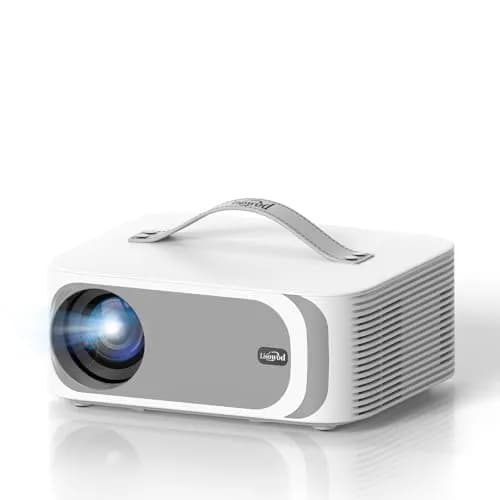
Lisowod L61Pro
96
Lisowod L61Pro
Check price
No offer right now

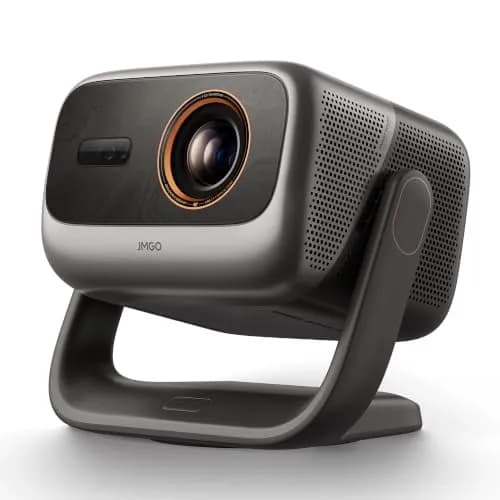
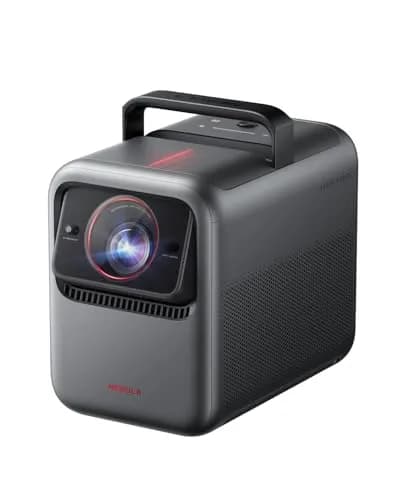
JMGO IRIS Ultra Max Beamer vs. Lisowod L61Pro compared

Projector

At a glance

The key numbers for both devices side by side.

Overall rating
90Sehr gut
96Sehr gut
Value for money
75Fair
65Fair
Best price
€3,299.00€3,499.00−6 %
No offer right now
Price advantage
—
—
Offers
1 shop
2 shops
Rank in category
Rank 2 of 40
Rank 1 of 40

Rating

Sub-ratings compared

JMGO IRIS Ultra Max BeamerOverall rating 90Lisowod L61ProOverall rating 96
ImagequalityBrightnessInstallation& setupSmartfeatures & soundMotion& gamingNoise,consumption & batteryBuildquality & ease of use
JMGO IRIS Ultra Max BeamerLisowod L61Pro
Image quality95/10096/100
Brightness91/10091/100
Installation & setup99/10096/100
Smart features & sound93/10099/100
Motion & gaming100/10097/100
Noise, consumption & battery73/10097/100
Build quality & ease of use77/10096/100
Image quality
95
96
Brightness
91
91
Installation & setup
99
96
Smart features & sound
93
99
Motion & gaming
100
97
Noise, consumption & battery
73
97
Build quality & ease of use
77
96

Specs

Specs compared

Key specs

Model
IRIS Ultra Max
L61Pro
Form factorBasic form of the projector, in this order: if it sits right in front of the wall as an ultra-short-throw unit, it is a laser TV. If it has a built-in battery, it is mini & portable – even with a stand. A swivel stand or gimbal without a battery means compact with swivel stand. Everything else is classic, for table or ceiling.
Compact with swivel stand
Classic (table or ceiling)
Light sourceType of light source.
Triple laser
LED
Native resolutionPhysical resolution of the panel or chip – not the supported input resolution. Cheap mini projectors often advertise 1080p or 4K, but their chip only has 1280×720
Full HD 1920×1080
Full HD 1920×1080
Light outputBrightness according to the manufacturer in ANSI or ISO lumens; around 3,000 or more for bright living rooms. Marketing figures such as “LED lumens” are considerably higher and not comparable.
6,500 lumens
2,000 lumens
Contrast (native)Native contrast without dynamic iris or laser dimming. Dynamic figures such as 1,000,000:1 are marketing.
10,000 :1
28,000 :1
Projection technologyImage generation method; with single-chip DLP, some people see rainbow effects.
DLP
LCD (single-chip)
Throw typeRequired distance from the projection surface.
Short throw (ST)

Picture & resolution

Supported resolutionHighest signal resolution the projector can process; may be higher than the native resolution.
4K UHD 3840×2160
4K UHD 3840×2160
4K display methodNative = true 4K pixels; pixel shift (XPR, e-shift) creates 4K by rapidly shifting the pixels.
Pixel shift (XPR)
4K signal processing only
Aspect ratioNative aspect ratio of the projector.
16:9
16:9
HDR formatsSupported HDR standards. Almost every projector handles HDR10; Dolby Vision and HDR10+ make the difference.
HDR10HLGDolby VisionHDR10+
HDR10+
3D-capableCan play 3D content.
Yes

Brightness & color

Brightness standardBrightness figures are only comparable within the same standard.
ISO lumens
ANSI lumens
DCI-P3 color gamut coverageCoverage of the DCI-P3 color space; relevant for HDR content.
99 %

Light source & use

Light source lifespanManufacturer’s figure in hours until half brightness; lamps 3,000–8,000 h, LED/laser 20,000–30,000 h.
20,000 hours
30,000 hours
Intended useUses the manufacturer intends the projector for – often more than one.
Home theaterGamingLiving room / daylight
Home theaterGaming

Optics & installation

Minimum throw ratioSmallest value of distance divided by image width. At 1.2, the projector must be placed 2.4 m away for a 2 m wide image.
0.88 :1
Maximum throw ratioLargest throw ratio value for zoom lenses.
1.7 :1
Maximum image sizeLargest usable image size according to the manufacturer.
300 inches
200 inches
Optical zoomZoom factor of the lens; 1.0 means fixed focal length.
1.93 x
1 x
Vertical lens shiftVertical lens offset for moving the image without distortion.
130 %
Horizontal lens shiftHorizontal lens offset for moving the image without distortion.
53 %
Keystone correctionCompensates for angled placement.
Automatic
Automatic
AutofocusAutomatic image focusing.
Yes
Yes
Installation optionsSupported mounting and projection types.
TabletopCeiling mount
Front projectionCeiling mountRear projection

Gaming & connections

Input lagInput delay in the fastest mode; under 30 ms is considered good.
1 ms
Refresh rateHighest supported refresh rate.
240 Hz
HDMI versionHighest HDMI version; 2.1 for 4K at 120 Hz.
HDMI 2.1
ConnectionsAvailable interfaces.
HDMIHDMI with eARCUSB-AAudio output (jack)
HDMIHDMI with eARCAudio output (jack)

Smart features & operation

Operating systemBuilt-in smart platform for streaming apps.
Google TV
Proprietary system
Official NetflixNetflix runs as an official app according to the manufacturer – many low-cost Android projectors lack the license.
Yes
Yes
Wireless connectivityWireless interfaces and casting methods.
Wi-FiWi-Fi 6BluetoothAirPlayChromecast
Wi-FiWi-Fi 6BluetoothChromecast
Speaker outputOutput of the built-in speakers according to the manufacturer in watts.
25 W
30 W
Built-in batteryCan run without mains power.
No
Operating noiseNoise level in normal mode; under 26 dB is considered quiet.
26 dB
40 dB
Power consumptionPower consumption in normal operation.
300 W
80 W
WeightWeight of the projector without accessories.
6.95 kg (15 lb)
1 kg (2.2 lb)
DimensionsWidth × depth × height in cm.
23 × 30 × 27 cm (9.1 × 12 × 11 in)
20 × 16.7 × 8.2 cm (7.9 × 6.6 × 3.2 in)

General

Warranty
2 years
3 years
Price segment
Premium
Mid-range
Model year
2026
2025
In the box
Projektor, Fernbedienung, Batterien, Linsentuch, Kurzanleitung, Netzteil, Ladekabel
Beamer, Fernbedienung (ohne Batterien)

Prices

Offers

JMGO IRIS Ultra Max Beamer

Lisowod L61Pro

Ad · Links marked with * are affiliate links: if you buy through them, we earn a commission – at no extra cost to you.

Verdict

Pros & cons

Der JMGO IRIS Ultra Max ist ein heller Kurzdistanz-Laser für Bilder ab 120 Zoll und schnelles 4K-Gaming mit 120 Hz bei nur 5,5 ms Verzögerung. Im Filmmodus bleiben gut 4.300 Lumen, mit Blende F5.0 gibt es tiefes Schwarz bei 2.500 Lumen. Optischer Zoom, Lens Shift und Motor-Ständer erleichtern die Aufstellung. Der Haken: verschachtelte Menüs und wackliges Dolby Vision mit externen Playern kosten dich Zeit beim Einrichten.

Pros

  • 4K mit 120 Hz an zwei HDMI-2.1-Eingängen, Latenz um 5,5 ms
  • Gut 4.300 Lumen im farbtreuen Filmmodus, genug für Restlicht
  • Dual-Iris hebt den Kontrast bei F5.0 auf 5.100:1 bis 8.600:1
  • Optischer Zoom 0,88 bis 1,7:1 und Lens Shift ohne Schärfeverlust
  • Motor-Ständer dreht 360 Grad, speichert bis zu zehn Positionen
  • Google TV mit offizieller Netflix-App und kräftigem 25-W-Ton

Cons

  • Dolby Vision von direkt angeschlossenen Blu-ray-Playern kommt nicht immer an
  • Bildmenüs unübersichtlich, einfache Profile für Raumlicht fehlen
  • Automatische Ausrichtung trifft an wechselnden Flächen nicht immer
  • Lüfter rauscht mit rund 30 dB statt versprochener 26 dB
  • Regenbogeneffekte bei schnellen Bewegungen für Empfindliche sichtbar

Der Lisowod L61Pro ist ein solider Netflix-Beamer fürs Schlafzimmer: natives Full HD, Netflix, Prime Video und YouTube ohne Stick, schnell eingerichtet. Ein gutes Bild gibt es aber nur im abgedunkelten Raum, das „4K“ ist bloß Signalverarbeitung. Dazu kommen ein stets hörbarer Lüfter, wackliges WLAN und einzelne Geräte mit Bildflecken nach Monaten.

Pros

  • Netflix, Prime Video und YouTube offiziell an Bord, mit eigenen Tasten
  • Natives Full HD mit 1920 x 1080 Pixeln, im Dunkeln scharf und farbkräftig
  • Flottes Betriebssystem ohne lange Wartezeiten
  • Kompakt mit 20,0 x 16,7 x 8,2 cm und rund 1,1 kg
  • Autofokus und Trapezkorrektur liefern bei vielen Geräten nach etwa 3 s ein gerades Bild
  • HDMI-eARC und Bluetooth für Soundbar oder Box

Cons

  • Bild wird schon bei Lampenlicht flau, Tageslicht verträgt er nicht
  • Kein natives 4K, 4K-Signale werden auf 1080p heruntergerechnet
  • Lüfter mit 40 dB in ruhigen Szenen immer hörbar
  • Wenige Apps jenseits der großen drei, viele starten nicht zuverlässig
  • Einzelne Geräte zeigen nach 9 bis 12 Monaten Flecken im Bild

Spotted an error?

Wrong price, wrong spec or a dead link – let us know and we will fix it quickly.

Report an error

Similar comparisons

JMGO IRIS Ultra Max BeamerJMGO IRIS Ultra Max Beamer90
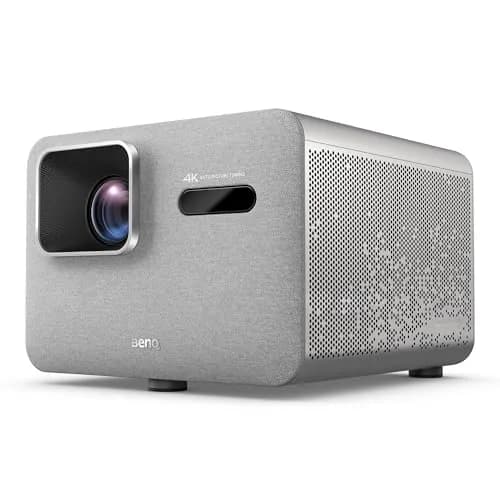
BenQ TK705STi BeamerBenQ TK705STi Beamer88
View comparison
JMGO IRIS Ultra Max BeamerJMGO IRIS Ultra Max Beamer90
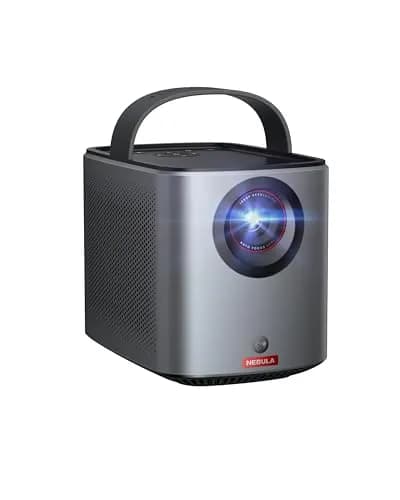
Nebula Mars 3 Air Mini ProjektorNebula Mars 3 Air Mini Projektor88
View comparison
JMGO IRIS Ultra Max BeamerJMGO IRIS Ultra Max Beamer90
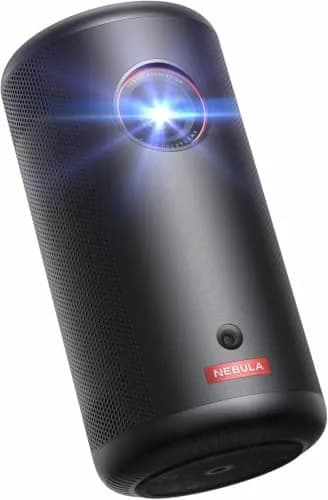
Nebula Capsule 3 Laser ProjektorNebula Capsule 3 Laser Projektor88
View comparison
JMGO IRIS Ultra Max BeamerJMGO IRIS Ultra Max Beamer90
Nebula X1 ProjektorNebula X1 Projektor88
View comparison

Keep reading

What’s next?

Maybe a different type of device?

Same kind of training, different devices – one click away.

Build your own comparison